Switzerland by Train
Lucerne — Interlaken — Zermatt — Locarno — Zurich
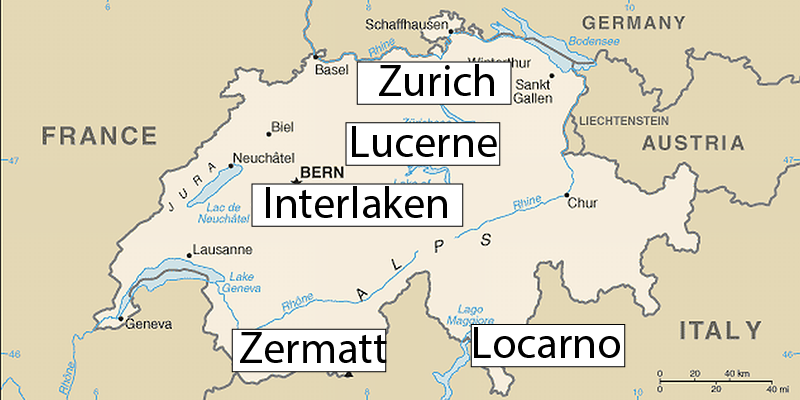
This itinerary covers the most scenic and rewarding parts of Switzerland entirely by train, staying several nights in each location. It was developed and conducted many times as a guided tour and is presented here so you can follow it independently.
.webp)
Switzerland's rail network is the most efficient in the world — nearly every mountain, lake and village is reachable by train, rack railway, cable car or boat, and a Swiss Travel Pass covers all of them. Detailed guides to each destination are linked throughout.
Lucerne — 3 nights
.webp)
The most popular city in Switzerland, set on Lake Lucerne at the foot of the Alps with a beautifully preserved medieval Old Town. The Kapellbrücke, a 14th century covered wooden bridge 560 feet long, is the city's most photographed landmark. The old fortification wall survives from the same era, with three towers open to the public and a walkable section giving views over the rooftops.
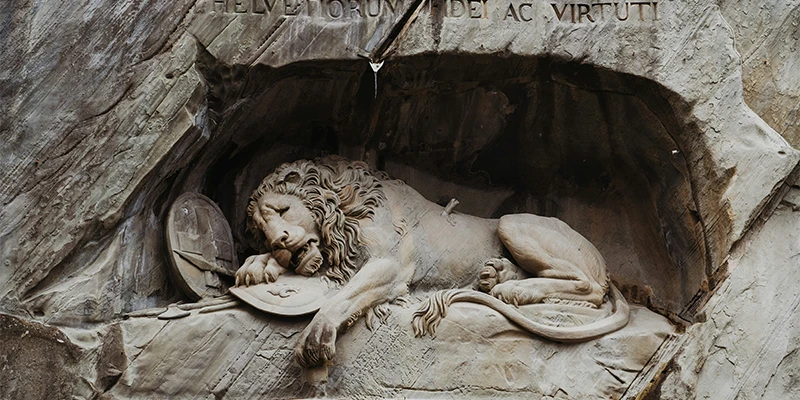
The Lion Monument, carved into a sandstone cliff to commemorate the Swiss Guard killed defending Louis XVI in 1792, is one of the most moving public monuments in Europe — Mark Twain called it the saddest piece of rock in the world.
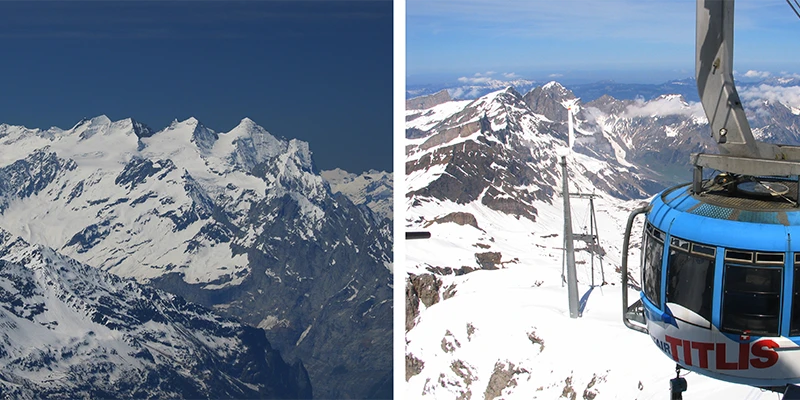
Two mountain excursions make the most of the three nights: a train and cable car journey to Mount Titlis at 10,000 feet for snow and glaciers, and a boat and rack railway trip to Mount Pilatus with its panoramic view over the lake.
-5.webp)
The train ride from Lucerne to Interlaken travels through the majestic Brunig Pass, with some of the trip's best scenery.
Interlaken — 3 nights
-22.webp)
Interlaken makes a perfect base for exploring the Bernese Oberland, surrounded by the Jungfrau, Mönch and Eiger peaks. Three nights gives time to cover the two main mountain experiences without rushing.
.webp)
Day One: the Jungfrau — Europe's highest train station at 11,333 feet — a full-day journey via Lauterbrunnen, Wengen and Kleine Scheidegg, returning via Grindelwald. The views from the Sphinx observation platform, 11,700 feet up with the Aletsch Glacier stretching 13 miles to the horizon, are among the most extraordinary in Europe.
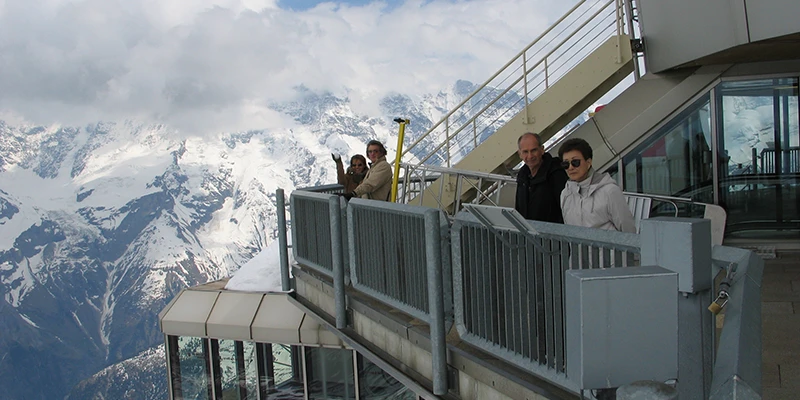
Day Two: the Schilthorn via Lauterbrunnen and the village of Mürren, a car-free Alpine village with a panoramic view of the three great peaks, returning on foot along the easy trail to Grütschalp.
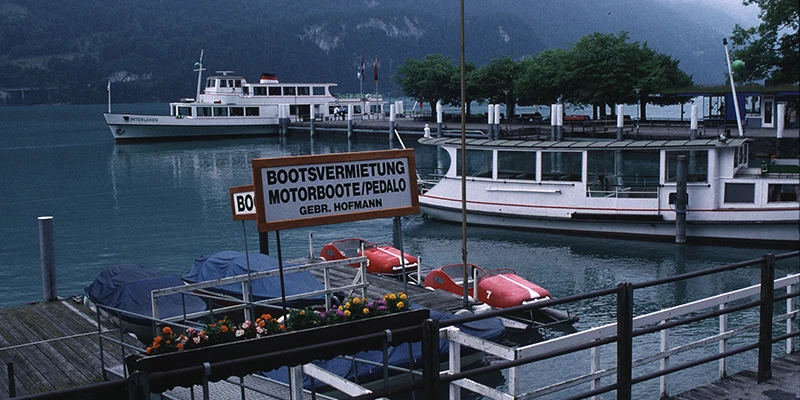
Day Three is flexible — lake boat rides on Brienz or Thun, hiking in the Grindelwald area, or a day trip to Bern, Switzerland's capital, with its four miles of covered arcades, Renaissance fountains and UNESCO-listed medieval center.
Zermatt — 2 nights
04copy.webp)
The Matterhorn — 14,700 feet of vertical rock — rises directly above the village in one of the most dramatic mountain silhouettes in the world.
04.webp)
No cars are permitted in Zermatt, which gives this famous resort an unusual tranquility for such a popular destination. Electric taxis and horse-drawn carriages are the only motorized transport. The main street, Bahnhofstrasse, is lined with upscale boutiques, watch shops, and historic hotels, serving as the social heart of the town.
04.webp)
The Gornergrat rack railway climbs to 10,000 feet with a panorama of 29 peaks over 13,000 feet high. The cable car to the Kleine Matterhorn at 12,533 feet — the highest cable car station in the Alps — puts you face to face with the mountain itself.
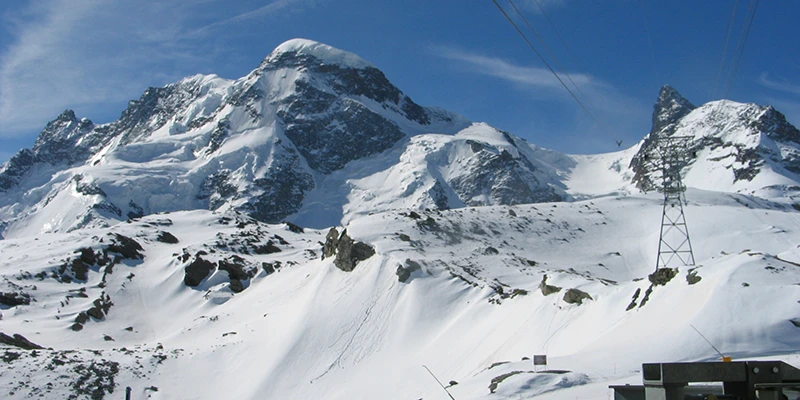
Walking trails of all levels reach out from the village in every direction, from easy valley strolls through wildflower meadows to more demanding ridge routes.
-18.webp)
The train journey from Zermatt to Locarno is another wonderful experience, passing through 17 Alpine valleys on the Centovalli railway before emerging into the Italian-speaking canton of Ticino.
Locarno — 2 nights
.webp)
Locarno has a Mediterranean climate — palm trees grow here, and the Piazza Grande is lined with arcaded restaurants and cafes with an entirely Italian character. The Old Town is compact, with a Visconti castle, Baroque churches and quiet lanes.
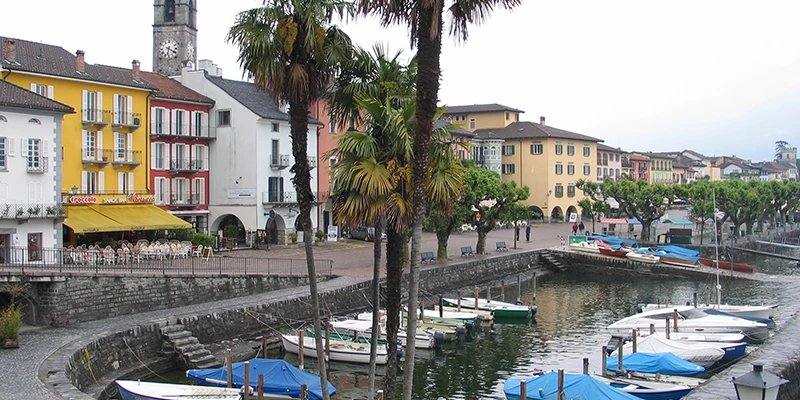
Day trips from Locarno include the lakeside village of Ascona 12 minutes away, a boat ride on Lake Maggiore, and excursions into the deep Alpine valleys of Val Verzasca and Val Maggia.
Lugano
.webp)
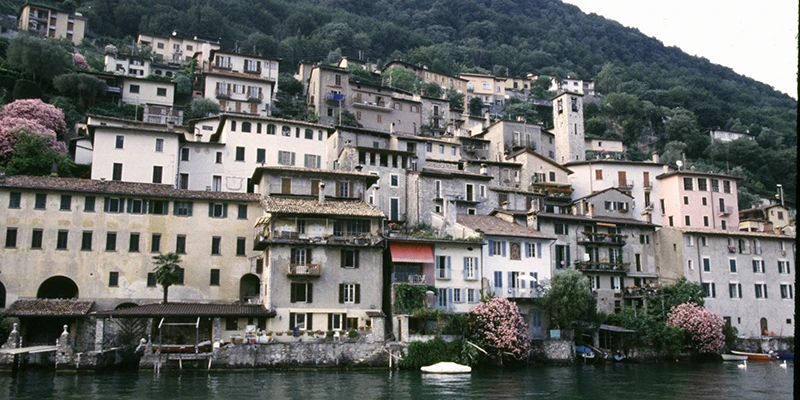
This nearby city is easily reached by train on a day trip from Locarno. You would enjoy its waterfront promenade, covered market lanes and a boat connection to the tiny fishing village of Gandria.
Zurich — 2 nights
Switzerland's largest city and financial capital conceals one of the most extensive and well-preserved medieval Old Towns in the country.
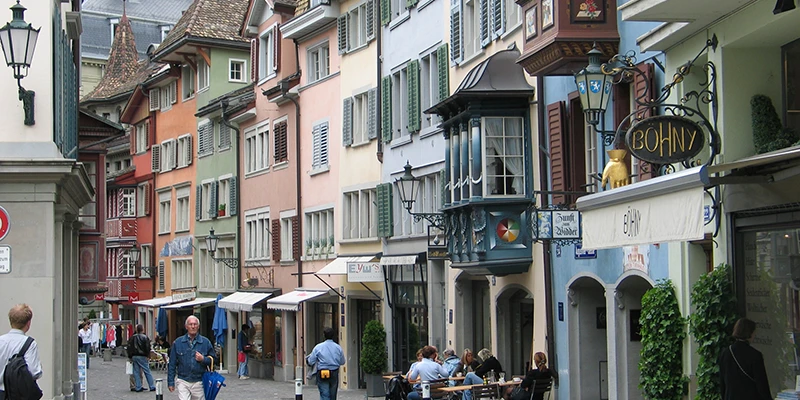
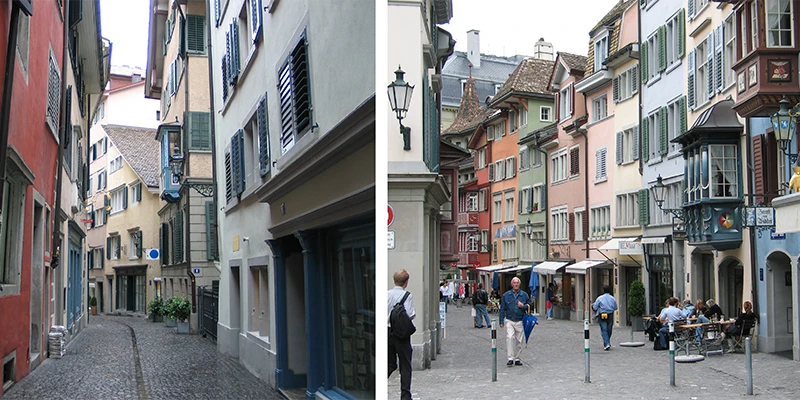
The Niederdorfstrasse on the east bank of the Limmat river is the main historic lane, pedestrianized its full length, curving gently past cobblestone alleys, small plazas, Romanesque churches and independent shops.
The Grossmünster, the twin-towered cathedral where Zwingli launched the Swiss Reformation in 1519, is the city's signature landmark.
copy.webp)
The Bahnhofstrasse on the west bank is one of Europe's most elegant shopping streets, limited to pedestrians and trams. The Swiss National Museum, behind the main station, covers Swiss history from the Stone Age in 80 galleries.
04.webp)
Another stroll in the charming streets of the Old Town, a boat ride on Lake Zurich, and an optional day trip to the old town of Zug complete the stay. Fly home the following morning.
04.webp)