British Isles: UK and Ireland in 3 Weeks
London — Bath — York — Lake District — Edinburgh — Ireland
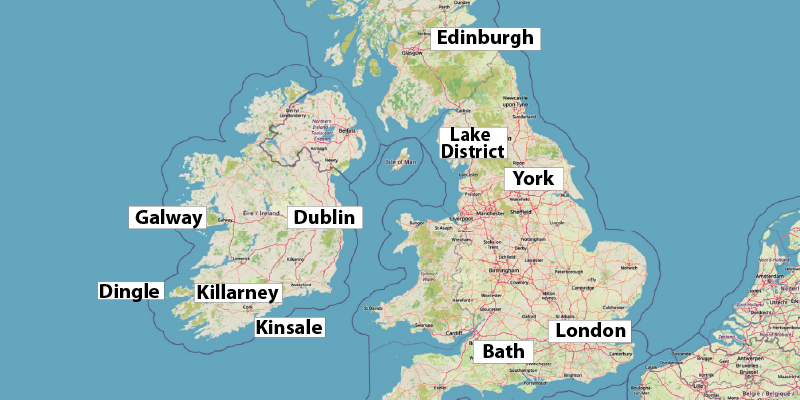
This itinerary stays in ten different destinations, with a few day-trips out from them. It could be done in three weeks by staying 2 nights in most places, and 3 nights each in London and Edinburgh. Of course you might want a slower or faster pace, and can adjust the schedule to your preference, so consider this to be an outline for you to play with.
See also our four-week itinerary visiting other cities of England.
.jpg)
Our description of the tour can help you plan your own trip. It is not difficult because you will be taken care of with efficiency and friendliness in the hotels, trains, restaurants, shops and on the street. We have carefully planned and conducted this tour many times and are now giving away the secrets of how you can do this tour on your own. Go for it.
Great Britain is covered by train on the Intercity express network; Ireland is done either by organized tour with a private hire van, or self-drive in a rental car.
Developed and conducted many times as a guided tour, the itinerary is provided here for self-guided travelers. Great Britain is covered by train on the Intercity express network; Ireland is done either by organized tour with a private hire van, or self-drive in a rental car.
London
copy.webp)
The capital is one of the world's great cities, and the West End makes the best base — within walking distance of Trafalgar Square, the National Gallery, Covent Garden, Soho, and the theater district of Shaftesbury Avenue. An orientation walk through Leicester Square and Covent Garden, with the small Chinatown along Old Compton Street, covers the immediate neighborhood. Oxford Street and Bond Street to the north hold many of London's finest shops.
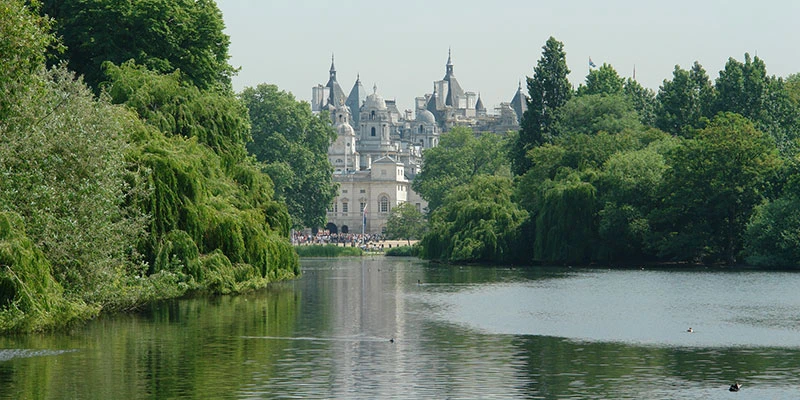
The Changing of the Guard at Buckingham Palace is daily pomp and circumstance worth seeing once, with redcoat soldiers parading from St. James's Palace through the park to a brass band climax at the palace gates. An afternoon on an open-top bus passes the Houses of Parliament, Big Ben, St. Paul's Cathedral, and the broader sweep of the city. The British Museum, the South Bank, the Tower of London, and the National Gallery each fill a half-day depending on your interests. Evenings belong to the theater — Shaftesbury Avenue holds most of the West End's musicals and plays — or to the pubs around Leicester Square for British ales and stouts.
Bath
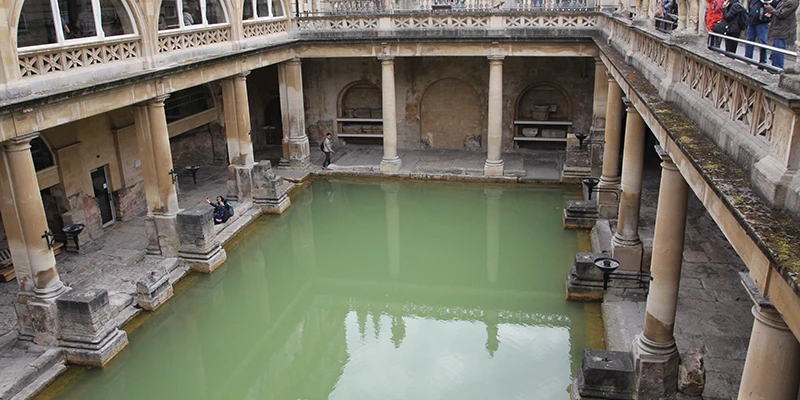
Bath is the finest Georgian town in England, built entirely in warm cream-colored limestone around the original Roman baths that gave the city its name. An open-top bus tour circles the center and the surrounding hillsides for a quick orientation, and a walking tour follows the layout of the planned town on foot.
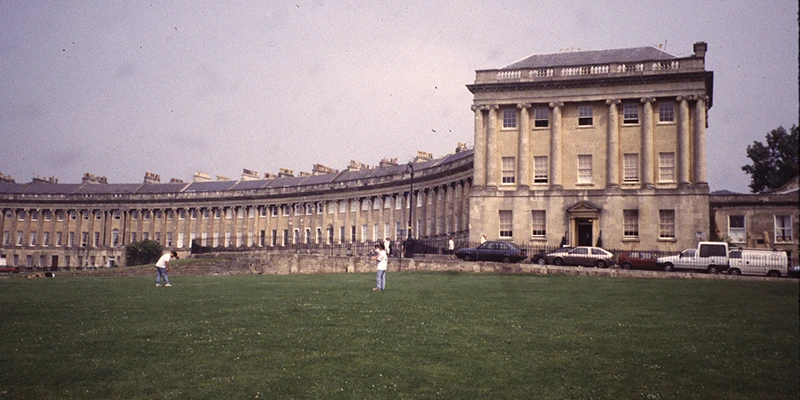
The Royal Crescent and the Circus are two of the most harmonious pieces of urban design in Europe. The Roman Baths museum is one of the best in the country — a walk through the ancient hot water system with exhibits on how Roman planners brought central heating, town layout, and public baths to this northern outpost two thousand years ago.
Cotswolds daytrip
.webp)
One of the Bath days makes an ideal trip into the Cotswolds — Bibury, Bourton-on-the-Water, the Slaughters, and Castle Combe are within easy reach, with cream teas and countryside walks along the way.
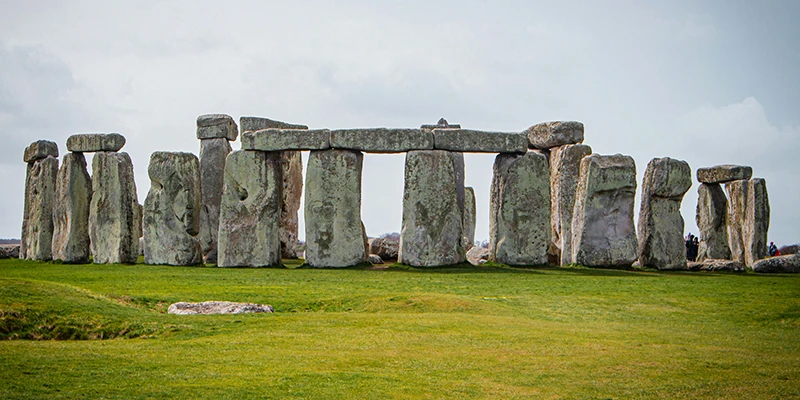
Alternatively, Stonehenge, Avebury, and Lacock make a compelling day in the opposite direction — chalk horse carvings, thatched cottages, and film locations from Pride and Prejudice and Harry Potter.
York
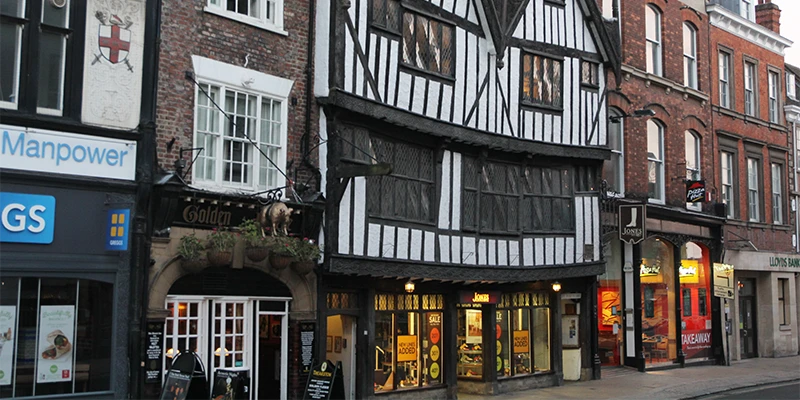
York is the best-preserved medieval town in England, still enclosed within its original 13th century walls, which you can walk in their entirety for views over the ancient rooftops.
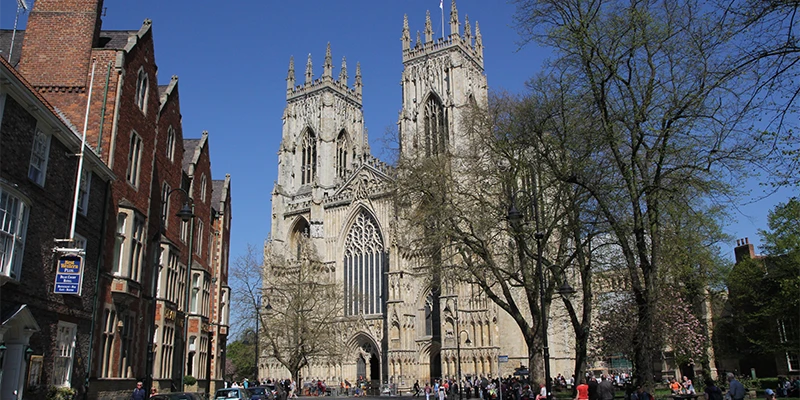
The Minster is the largest Gothic cathedral in England, and the stained glass alone is worth the journey.
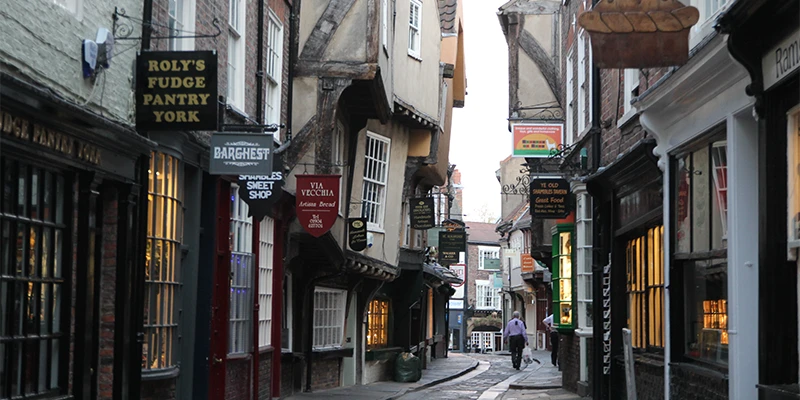
The Shambles, one of the narrowest streets in Europe, leads into a network of medieval pedestrian lanes lined with independent shops, antique dealers, fish and chip shops, and open markets.
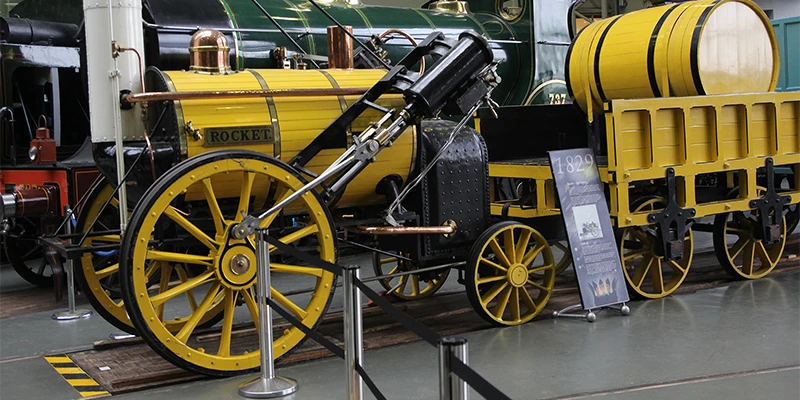
The National Railway Museum, the Jorvik Viking Centre, and the Castle Museum fill any remaining time. Castle Howard, one of the country's most extravagant stately homes, lies a short distance outside town.
Lake District
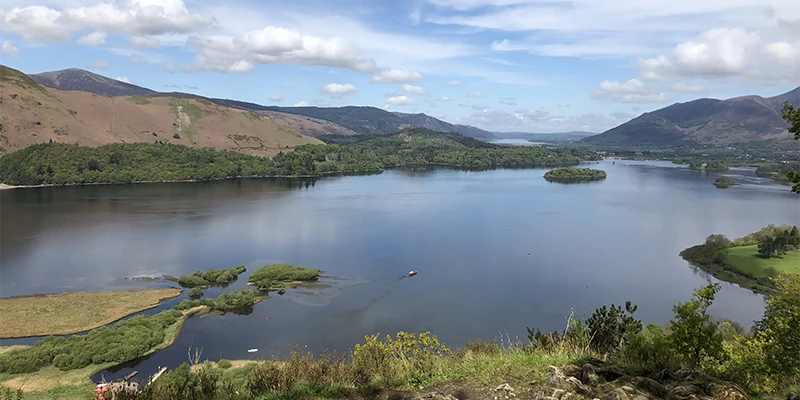
The route north from York passes through the Yorkshire Dales and Herriot Country — rolling green hills patterned with stone walls and sheep pastures, dotted with quaint villages and rustic pubs. Windermere makes the best base in the Lakes, with the fells, lakes, and stone-walled pastures of the national park on all sides.
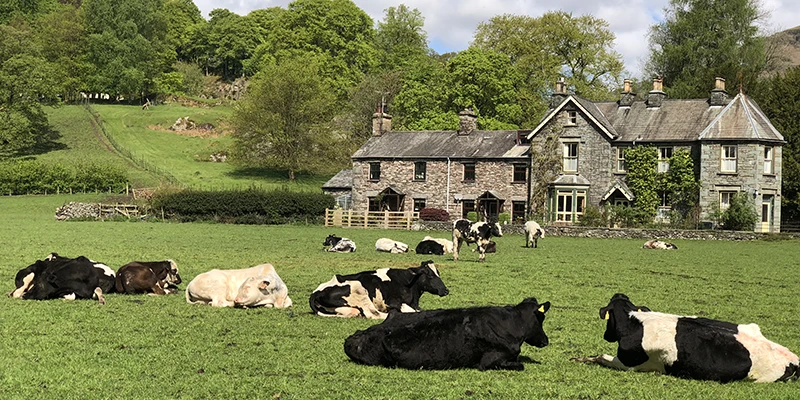
A half-day excursion by van tour or rented car takes you into the heart of the landscape — Grasmere, Dove Cottage where Wordsworth lived and wrote, Coniston Water, and the quieter northern valleys.
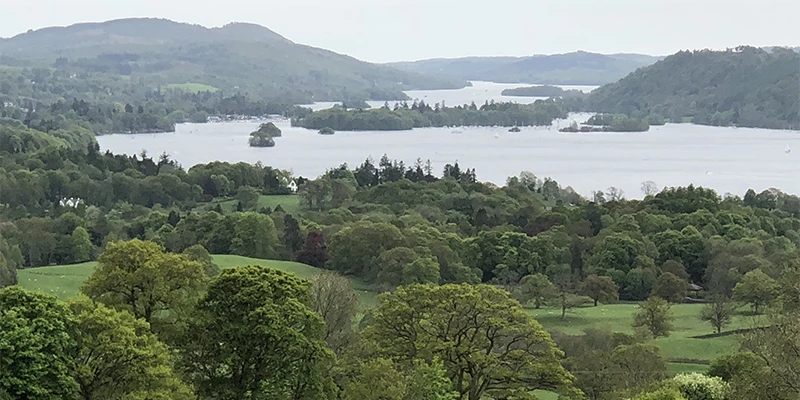
A cruise on Lake Windermere is one of the most peaceful hours available anywhere in England.
Edinburgh
.webp)
Scotland's capital divides neatly into two cities: the medieval Old Town along the Royal Mile, running from the Castle high on its rock down to Holyrood Palace, with crooked stone lanes spreading off to either side; and the Georgian New Town laid out in the 18th century as one of the first planned cities in Europe. The Old Town's narrow back closes were among the most densely populated neighborhoods in Britain five centuries ago, and have since been redeveloped into one of the city's most desirable areas.
.webp)
Princes Street is the main shopping artery of the New Town, with Rose Street running parallel one block north — a narrow pedestrian lane packed end-to-end with traditional pubs. The National Gallery of Scotland, also on Princes Street, holds one of the finest collections of Old Masters outside London. Edinburgh Castle, sitting on the volcanic rock above the city center, is worth a visit for the views over the rooftops alone.
.webp)
An easy day-excursion from Edinburgh reaches into the Scottish Highlands — the route to Loch Ness passes through the steepest, greenest mountains in Britain, with streams, waterfalls, scattered castles, and ancient stone monuments dating to the Stone Age. An evening of traditional Scottish music and dinner is widely available in town.
Ireland
.webp)
Galway, Dingle, Killarney, Kinsale, Dublin. Fly to Dublin from Edinburgh. From Dublin airport, travel west by private hire van in a tour, or rental car.
Galway
.webp)
Galway is the gateway to Connemara, one of the wildest and most beautiful landscapes in Ireland — mountains, bog, rock walls, abandoned stone cottages and the Atlantic always in view.
.webp)
Kylemore Abbey, set dramatically at the base of a mountain above a lake, is the most visited building in the region.
.webp)
A day trip to the Aran Islands, reached by ferry from Rossaveel, adds prehistoric stone forts and a way of life that changed little in centuries.
Dingle
.webp)
Dingle is a fishing port on the Atlantic coast of County Kerry, set at the head of a sheltered harbor. The town of Dingle itself is small, friendly and unpretentious.
.webp)
Brightly painted pubs and craft shops line the main streets, and traditional music plays most evenings. The town is the gateway to the Slea Head loop, a coastal drive past cliffs, beehive huts and early Christian sites.
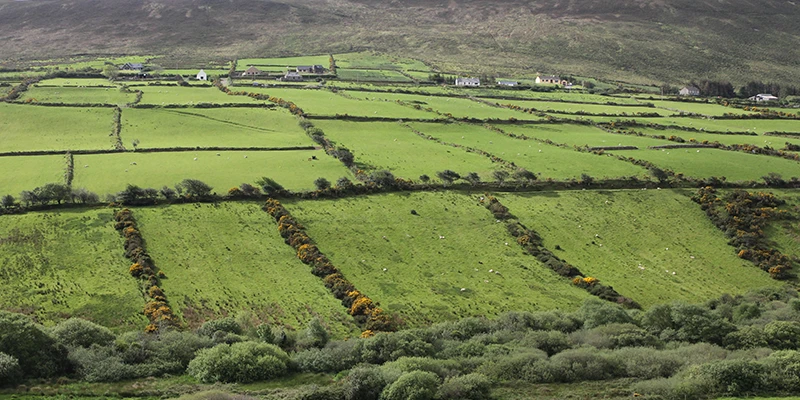
The Dingle Peninsula combines early Christian monuments — the 6th century Gallarus Oratory is remarkably intact — with the most spectacular coastal scenery in Ireland.
.webp)
The drive around Slea Head and over the Connor Pass, with the Atlantic breaking far below, is one of the great drives in Europe.
Killarney
.webp)
Killarney sits at the edge of Ireland's first national park, a 10,000-hectare landscape of lakes, ancient oak woods and the country's highest mountains. The town itself is lively and walkable, with traditional pubs and music.
.webp)
Muckross House, Ross Castle and Torc Waterfall lie within easy reach, accessible on foot, by bike or in the horse-drawn jaunting cars that have carried visitors through the park for generations.
Kinsale
copy.webp)
Kinsale is a small harbor town on the south coast, an hour below Cork. Narrow streets of brightly painted shopfronts climb from the waterfront, lined with seafood restaurants that give the town its reputation as Ireland's gourmet capital.
copy.webp)
Charles Fort, a star-shaped 17th-century citadel, sits on the headland east of the harbor.
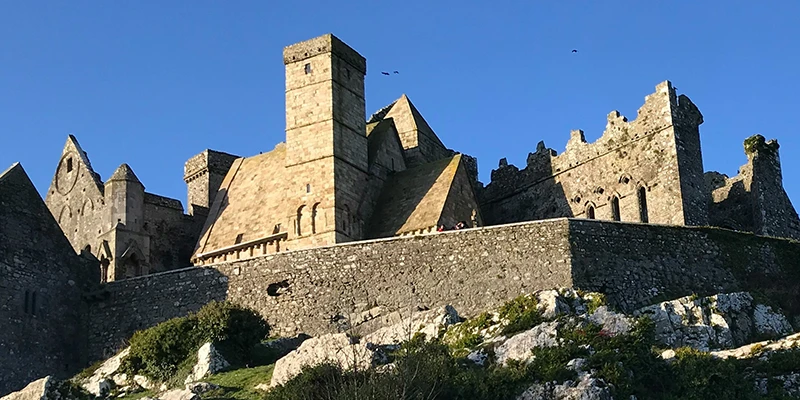
En route, the Rock of Cashel — a medieval cathedral and round tower rising dramatically from a limestone outcrop in Tipperary — makes a worthwhile stop coming from Kinsale.
Dublin
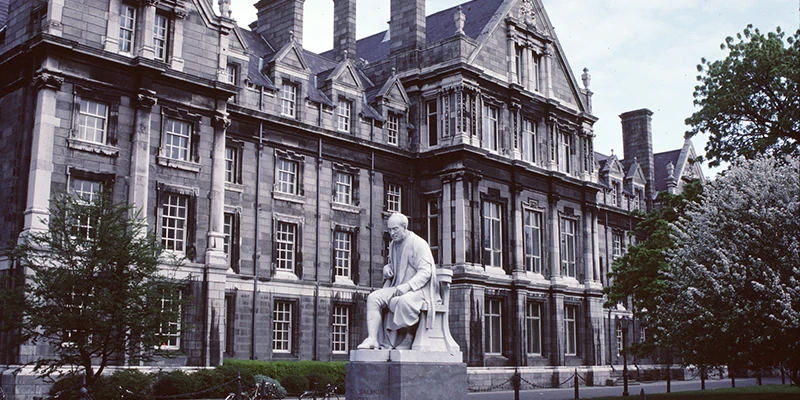
Dublin sits on the River Liffey with compact, walkable streets. Trinity College holds the Book of Kells.
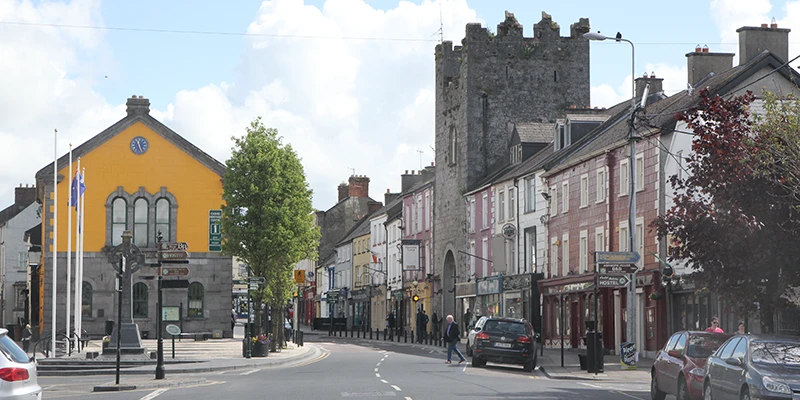
Georgian squares line the south side, with Dublin Castle, Christ Church and St. Patrick's Cathedral nearby.
.webp)
Temple Bar covers the pubs, Grafton Street the shopping, and the Guinness Storehouse the city's best-known brewery tour.
.webp)