Three Days in Vienna
Vienna is a historic yet modern city — a living museum of monuments and memories connected to a long rich history, but also a sophisticated place with glamorous shops and cutting-edge design. It is a romantic place alive with the music of Mozart, Haydn, Strauss, and Beethoven, enriched by the legacy of the immensely wealthy Habsburg dynasty who created some of the world's finest palaces, opera houses, museums, parks, fountains, public architecture, and grand promenades. The Habsburgs ruled over much of the Western world during several centuries from their huge palace, which today is one of Vienna's main visitor attractions with its many museums and several concert halls.
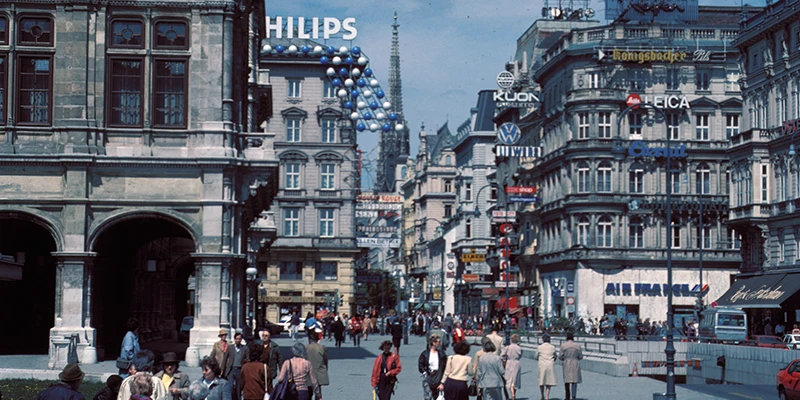
As always in our three-day approach, we present the major sights that you should not miss, then point you to the little back alleys and minor attractions where you can get away from the crowds and discover the real heart and soul of the city. Wandering in the quiet lanes can be a rewarding experience — if you pick the right places and don't randomly get lost in some boring streets, so come along with us as we show you the best routes for making the most of your time.
The ensemble of visitor attractions in Vienna is quite compact, covering about one square mile, so you can easily see it all in three well-planned days. This Austrian city is a rich architectural mix — Gothic, Renaissance, 19th-century Imperial, Art Nouveau, and Postmodern — blending influences from Italy, Germany, and France into a harmonic Viennese mélange.
The layout of Vienna is organized and easy to navigate, with the central part of town surrounded by the Ringstrasse, or Ring Road, following the same route as the medieval city walls that once surrounded and protected the city. The fortification walls played two important roles for many centuries during the Middle Ages: keeping various enemies away and containing the town in a small area. Most of the neighborhoods within this central area still have a very ancient feeling to them.
By the middle of the nineteenth century the walls were no longer needed for defense but rather were considered a problem that was limiting the growth of the city, so they were pulled down to make room for expansion. The grand boulevard that took their place forms a semi-circle about one mile across, containing a large central pedestrian zone filled with old buildings and monuments. Behind the historic facades are up-to-date shopping and dining, with music, art, and culture all around you.
How this guide is organized
Three day-by-day itineraries walk you through Vienna's major sights in a recommended order:
Day One — The historic center. Stephansdom, the Kärntnerstrasse pedestrian mall, the State Opera, Karlsplatz, the Kunsthistorisches Museum, and a tram ride around the Ringstrasse.
Day Two — Schönbrunn Palace, the hidden lanes behind the cathedral, and the pedestrian sequence from the Graben to the Freyung, ending at a Heuriger in the wine villages.
Day Three — The Upper Belvedere with Klimt's The Kiss, the Hofburg Palace, the MuseumsQuartier, Mariahilfer Strasse, the Hundertwasserhaus, and the Prater Ferris wheel at sunset.
Two companion pages expand on specialized topics:
Music and Wine — A full rundown of concert venues from the Staatsoper through the Musikverein and Konzerthaus to the visitor-oriented Mozart and Strauss evenings at the Hofburg, Kursalon, and Schönbrunn. Also covers opera, the Vienna Boys' Choir, jazz clubs, and a detailed guide to the Heurigen wine villages on Vienna's outskirts.
History of Vienna — Background on the Celts, Romans, Babenbergs, and the Habsburg centuries; the Ottoman sieges; the Ringstrasse era; the Anschluss and Second World War; post-war reconstruction.
The day pages are written as an unhurried three-day arc, but they also work à la carte if you only have one or two days. The list begins with the most important sights, so skip whatever doesn't interest you.
Day One at a glance
- Stephansdom and the historic center
- Kärntnerstrasse pedestrian mall and Café Sacher
- State Opera House
- Karlsplatz: Karlskirche, Secession Building, Musikverein
- Mozart statue in the Burggarten
- Kunsthistorisches Museum (afternoon)
- Tram ride around the Ringstrasse
Day Two at a glance
- Schönbrunn Palace (morning)
- Hidden lanes behind Stephansdom
- Graben, Kohlmarkt, Naglergasse, Am Hof, Freyung
- Café Central and the coffee-house tradition
- Minoritenkirche and its Last Supper mosaic
- Evening at a Heuriger in Grinzing
Day Three at a glance
- Upper Belvedere with Klimt's The Kiss
- Hofburg Palace: National Library, Treasury, courtyards
- Vienna Boys' Choir at the Hofburgkapelle (Sunday mornings)
- Spanish Riding School morning training
- Kapuzinergruft (Imperial Crypt)
- MuseumsQuartier: Leopold Museum, MUMOK, Spittelberg
- Mariahilfer Strasse shopping street
- Hundertwasserhaus
- Prater amusement park and the Riesenrad at sunset
General tips
.webp)
Music will accompany your visit to Vienna, especially in the many performance halls where there are concerts nearly every night. Johann Strauss the Younger composed "The Blue Danube," which has become the signature tune of Vienna, and you will probably hear it during your visit. Look for costumed young people on the main malls with posters in their hands selling tickets, or check with the concierge at your hotel. On the cutting-edge, Vienna is also alive with music performed in the streets, from rock to Mozart, jazz to Peruvian, soul to bluegrass. See the Music and Wine page for a full rundown.
Vienna's public transport system is one of Europe's best — five U-Bahn lines, an extensive tram network, and buses running until late. A single-fare ticket includes free transfers within about an hour; 24/48/72-hour passes give unlimited travel. The Vienna City Card combines transit with discounts at around 200 museums, sights, and restaurants. Everything in this three-day itinerary is walkable from a central hotel, but the passes are worth the cost for convenience, and Day Two specifically involves trips to Schönbrunn by U-Bahn. A detailed transport section appears at the start of Day Two.
Vienna rewards early starts. The main sights — Stephansdom, Schönbrunn, the Belvedere, the Hofburg — see big midday crowds and are noticeably calmer before 10 a.m. and after 4 p.m. Museums are generally open 10 a.m. to 6 p.m., some with late nights once a week. The Kärntnerstrasse, Graben, and old-town pedestrian zones are at their best early morning and at twilight, when the day-trippers have left.