Salzburg Day Two: Mirabell Gardens, museums, viewpoints, and countryside tour
Watch the Salzburg walking tour video →
The morning is spent on the right bank of the Salzach River, starting with a viewpoint that offers another postcard perspective on the old town and castle.
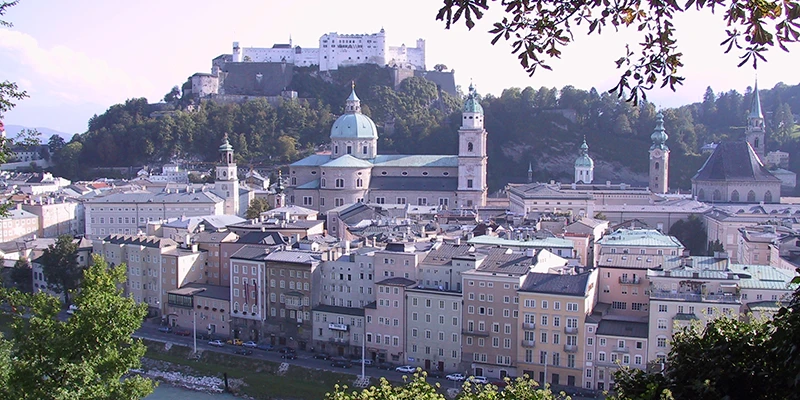
From Platzl Square, walk along Linzergasse to a steep driveway at number 14, then up a few steps and around a wooded bend to the Kapuzinerberg. The climb takes about ten minutes. The view takes in the Cathedral and other domes of the town across the river, with the castle looming on the rocky peak.
The vantage point is the Hettwer Bastion, built in the 1630s during the Thirty Years' War, the religious conflict between Catholics and Protestants. The view is best in the morning. Descend the same way, or take the Imberg staircase down to the river side and through the hidden medieval neighborhood along the Steingasse, a narrow cobblestone alley of considerable charm.
Return to Linzergasse, an ancient street similar to those of the old town, and note the traditional restaurants for a possible lunch stop. The next goal is three blocks away: the Mirabell Gardens.
Mirabell Gardens
copy.webp)
The grounds surrounding Mirabell Palace were originally laid out by the Austrian architect Fischer von Erlach in 1689, then redesigned thirty years later by Lukas von Hildebrandt — the same architect who designed the Belvedere Palace in Vienna — and have remained largely unchanged since. Manicured flowerbeds of bright red and yellow contrast with expansive green lawns, interspersed with statues and large fountains. The Pegasus Fountain is a centerpiece and appeared in the "Do-Re-Mi" sequence of The Sound of Music.
Mirabell Palace has an unusual history. It was built by Archbishop Wolf Dietrich, the same figure who initiated the Cathedral, for his mistress, with whom he had fifteen children. The Catholic Church of that era was more tolerant of clerical fatherhood than it is today; some popes of the same period were also known to have had mistresses and children. The palace was rebuilt and expanded over the years and suffered heavy bombing damage from the US Air Force during the Second World War, but is now thoroughly restored.
Today the palace is a municipal building, best known for weddings in the grand Marble Hall upstairs. On weekends, bridal parties fill the gardens — champagne, photographs, celebration. Take the Cherub Staircase up to the Marble Hall. Designed in 1723 by Raphael Donner in a whimsical Baroque style, the staircase features marble cherubs lounging along its banister.
The small Baroque Museum on the Mirabell grounds displays models, oil studies, and sketches for larger projects by artists including Bernini, Cortona, Tiepolo, Rubens, and Fragonard. It is open daily except Sunday afternoon.
Another attraction on this side of town is the Mozart Dwelling House, one block from the gardens, where Mozart and his family lived from his seventeenth year. He wrote numerous symphonies, serenades, divertimenti, and five concertos for violin and piano here. Some original manuscripts are on display, along with pianos, original furnishings, and a scale model of the Salzburg of Mozart's era. The house stands on Markatplatz, along with the Church of the Holy Trinity by Fischer von Erlach, which foreshadowed his masterpiece in Vienna, the Karlskirche.
Watch the Salzburg lakes and mountains video →
Lakes and Mountain Tour
The afternoon has time for an excursion out of town. Several half-day options are offered by the main tour companies; a recommended choice is the Lakes and Mountain Tour, departing Mirabellplatz early afternoon for about four hours.
The tour enters the Salzkammergut, the lake and mountain district that begins a few miles from town. This region, now a resort area, was first developed as hunting grounds for the archbishops about a thousand years ago; hunting by the public required their permit.
.webp)
The route passes the Fuschlsee, a lake some 60 meters deep that freezes in winter for ice skating and ice sailing, and the small Schloss Fuschl castle on its shore. Villages such as Faistenau, popular for hiking and paragliding, line the route; winter snow is cleared nightly to keep the roads open, and ski slopes operate nearby.
After about an hour of driving, the tour reaches St. Wolfgang on Lake Wolfgang. The lake is about seven miles long and up to 180 meters deep, surrounded by cliffs and peaks reaching around 6,000 feet. The water is warm enough for swimming in summer, and motorboats are prohibited, so the shoreline stays clean.
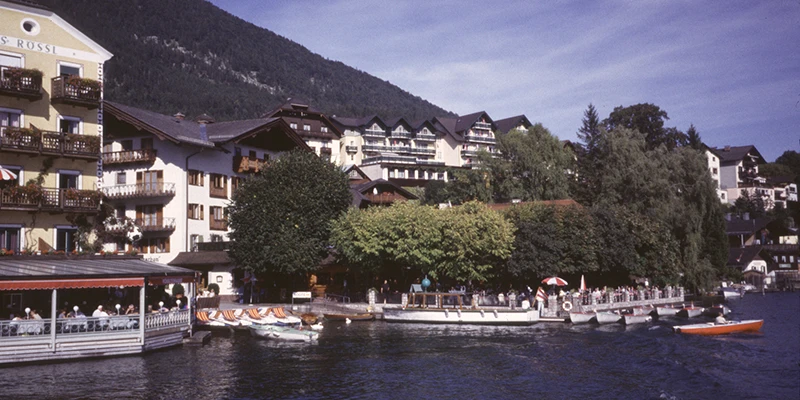
The village offers nearly two hours of free time for browsing, a terrace café overlooking the water, and a visit to the Gothic church for the wooden altar carved by Michael Pacher, a leading woodcarver from the Tyrol working at the start of the Renaissance. Pilgrims have come to St. Wolfgang since the 12th century. The Weisses Rössl hotel, celebrated in a 1930s operetta that revived the town's fame, stands on the lakefront.
The tour continues with a boat ride across Lake Wolfgang, about thirty minutes, passing small village clusters along the way. Passengers can sit on the open upper deck or below in the bar and restaurant lounge. The boat arrives at St. Gilgen, the village where Mozart's mother was born and his sister later lived. From there, it is about a half-hour ride back to Salzburg.
Evening: concerts
The evening leaves time for more exploration of the old town's lanes and a good dinner. Music is one of Salzburg's genuine specialties. The city was Mozart's birthplace, and performances run year-round in venues ranging from the castle and the Residenz to the smaller halls around the old town. The Salzburg Festival, held each year from late July through August, is among the world's major music events and books up well in advance. Outside festival season, tickets for chamber concerts and Mozart programs are generally available through hotel desks or the kiosks in the main squares. The castle itself hosts concerts on most nights of the year, and the Mozart Chamber Orchestra of Salzburg performs regularly at the Residenz.
Continue to Day Three: Churches, Viewpoints, and Day-Tours →